Basement Water Pressure Risk in Kansas City: Why KC's Clay Soil Creates Unique Flooding Challenges
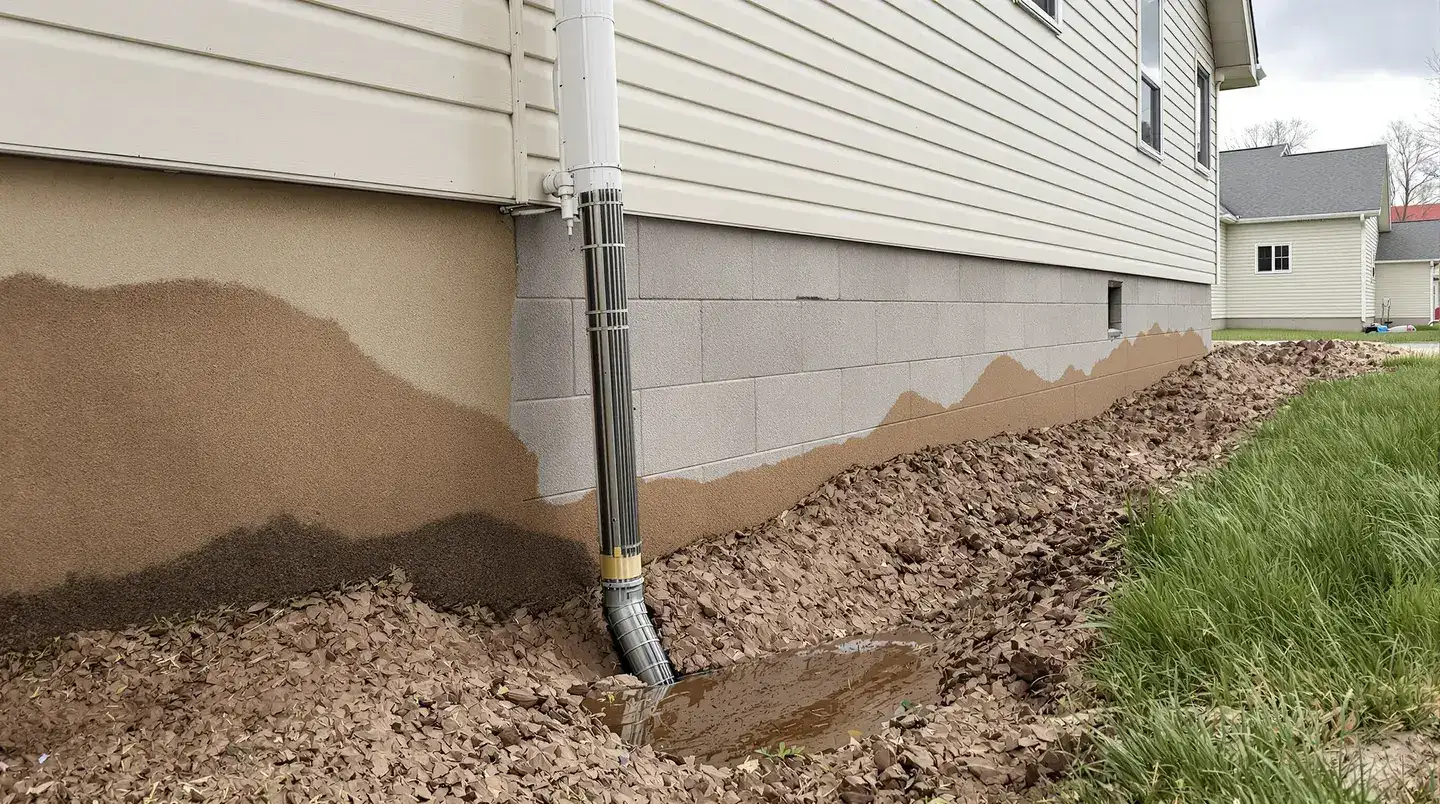
Kansas City sits on one of the most problematic soil formations for residential basements in the United States. The Wymore-Ladoga clay series — a dense, expansive soil that dominates Jackson, Johnson, Clay, Cass, and Platte counties — swells dramatically when it absorbs water and shrinks when it dries. This seasonal cycle creates lateral earth pressure that pushes against basement walls with increasing force after every rain event. For homeowners across the KC metro, understanding this soil is the first step toward protecting the most vulnerable part of their home.
Kansas City's dominant soil threat is lateral earth pressure from expansive clay — not groundwater flooding. This means wall damage (bowing, cracking, leaning) is the primary risk, and the damage compounds with every wet-dry seasonal cycle.
Why Kansas City's Clay Soil Is So Destructive to Basements
The Wymore-Ladoga clay series is classified as a high-plasticity clay with significant shrink-swell potential. When this soil absorbs rainfall, it expands by 4 to 8 percent by volume. That expansion generates lateral force against anything buried in it — including your basement walls. At the base of a standard 8-foot basement wall in fully saturated KC clay, the combined lateral earth pressure can reach approximately 600 pounds per square foot. Most residential basement walls were designed for at-rest pressures of 300 to 400 psf. The excess pressure drives the bowing, cracking, and eventual failure that thousands of KC homeowners experience.
What makes this soil particularly destructive is the cyclical nature of the damage. During Kansas City's wet springs (April through June), the clay absorbs water and pushes walls inward. During the dry summer months, the clay shrinks and pulls away from the foundation, opening gaps that allow the next round of rainwater to penetrate deeper into the soil column. When fall rains arrive (September through October), the clay re-saturates and pushes again — but the wall has already lost the ground it gave up in spring. Year over year, the wall moves further inward. A wall that bows 1/4 inch this year may show 1/2 inch next year and 1 inch the year after.
This progressive displacement is why early detection matters so much in the KC metro. A wall at 1 inch of deflection can often be stabilized with carbon fiber straps for $3,500 to $5,500. Wait until the wall reaches 3 inches of deflection and the repair bill jumps to $12,000 to $18,000 for helical tiebacks. At 4+ inches, full wall replacement at $20,000 to $35,000 becomes the only viable option.
Common Misconception
Most KC homeowners assume: If my basement wall has only moved a little, I can wait and address it later.
The reality: In expansive clay, wall deflection is progressive and accelerating. Every wet-dry cycle pushes the wall further. The repair cost at 1 inch of deflection is a fraction of the cost at 3 inches — and the wall will not return to plumb on its own.
KC's Housing Stock: Why 1960s–1980s Homes Are Most Vulnerable
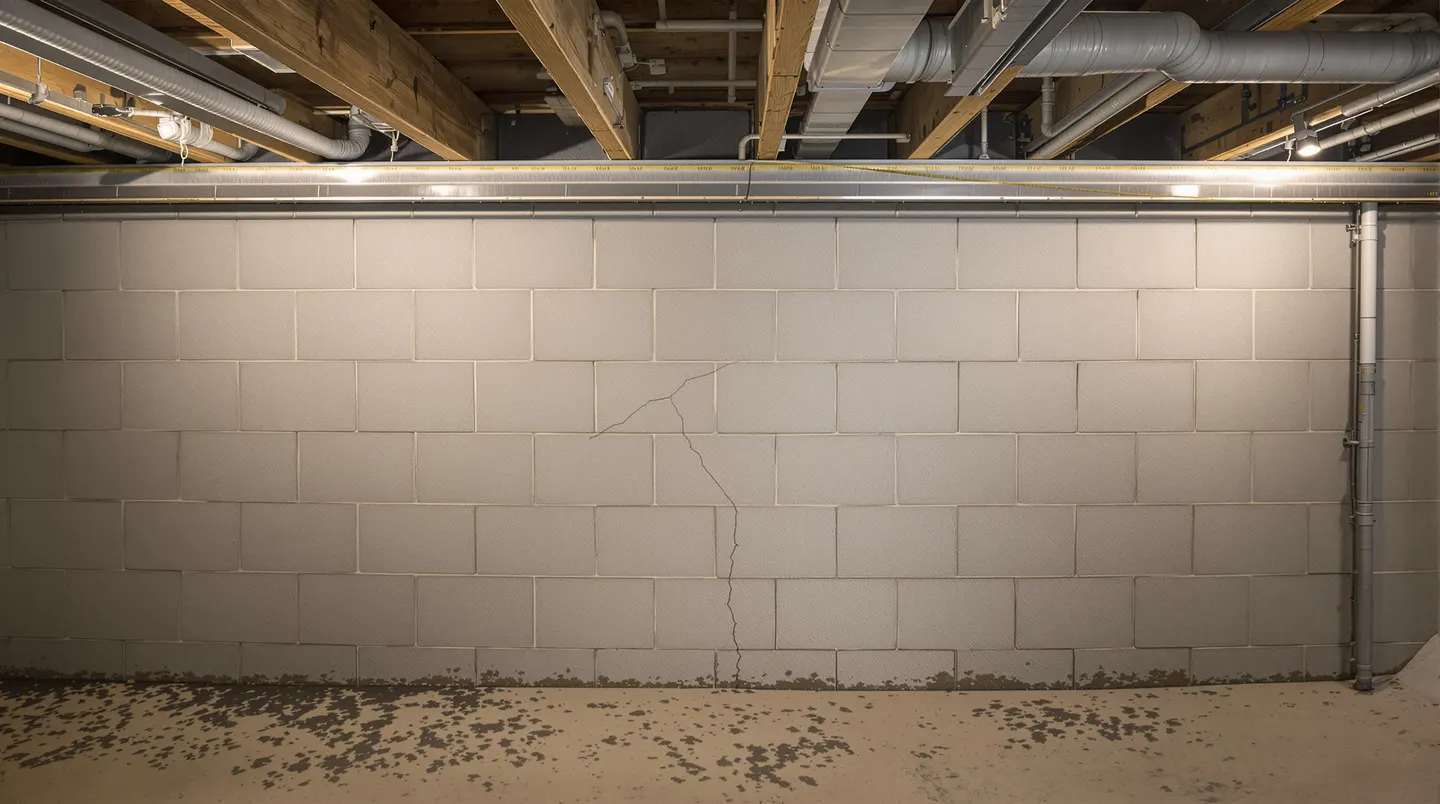
The Kansas City metro experienced its largest residential building boom between 1960 and 1985. Suburbs like Overland Park, Blue Springs, Independence, Lee's Summit, and Raytown added thousands of homes during this period. The dominant foundation type was concrete block (CMU) — a construction method that is inherently weaker against lateral earth pressure than poured concrete. Block walls rely on mortar joints that are softer than the blocks themselves, and lateral pressure concentrates stress at these joints. The result is the signature horizontal crack at mid-wall height that KC foundation contractors see daily.
Homes built during this era typically have 8-foot basement walls with no waterproofing membrane on the exterior. The backfill around the foundation was often the same clay that was excavated during construction — meaning the wall is directly surrounded by the most expansive soil available. Modern building codes require drainage board, waterproof membranes, and granular backfill, but homes built 40 to 60 years ago had none of these protections. For these homes, the wall has been absorbing the full force of clay expansion for decades.
Newer construction (post-2000) in areas like Raymore, southern Olathe, and western Lenexa typically uses poured concrete foundations with better drainage provisions. These homes face the same clay pressures but have more structural resistance and better initial waterproofing. However, even poured concrete walls in KC clay are not immune — they simply take longer to show symptoms. For a full understanding of how these pressures work, see our analysis of hydrostatic and lateral earth pressure.
Kansas City's Seasonal Basement Risk Calendar
Kansas City receives approximately 39 to 42 inches of rainfall annually, concentrated in two primary wet seasons. Understanding this seasonal pattern helps homeowners anticipate when their basement is under the greatest stress.
Spring Saturation (April – June)
Kansas City's wettest period. Clay absorbs water and expands, generating maximum lateral pressure. Basement walls experience the highest inward force of the year. Most new wall cracks and water intrusion events begin during this window.
Summer Drought (July – August)
Clay shrinks and pulls away from the foundation, creating gaps between the soil and the wall. These gaps become preferential pathways for the next round of water to reach the foundation at depth.
Fall Re-saturation (September – October)
Fall rains fill the summer shrinkage gaps and re-saturate the clay. The soil swells again, pressing against walls that have already been weakened by the spring cycle. Cumulative damage from both cycles compounds.
Winter Freeze (November – March)
Reduced rainfall and frozen ground decrease active pressure. However, freeze-thaw cycles in the top 2 to 3 feet of soil can cause additional mechanical stress on exposed foundation walls above grade.
The most dangerous pattern for KC basements is a wet spring followed by a dry summer followed by another wet fall. This maximizes the shrink-swell cycle amplitude and causes the greatest single-year wall displacement. Homeowners who notice new cracks appearing after spring rains or find water at the cove joint in April or May are seeing the direct consequence of this seasonal pressure cycle.
What KC Homeowners Typically See First
The most common basement symptoms in the Kansas City metro are driven by lateral earth pressure rather than groundwater flooding. This is an important distinction — it determines which repair methods are appropriate and which will fail.
Horizontal cracks at mid-wall height
The signature symptom of lateral pressure in block walls. The crack follows the mortar joint where bending stress is highest. Learn more about bowing basement walls.
Stair-step cracks in block walls
Diagonal cracking that follows the mortar joints in a staircase pattern. This indicates uneven settling or localized pressure concentration.
Efflorescence (white mineral deposits)
White powder on walls indicates water is migrating through the concrete and evaporating, leaving calcium deposits behind. See our efflorescence guide.
Water at the cove joint after rain
Water appearing where the wall meets the floor is hydrostatic pressure forcing groundwater upward through the cold joint. See water after rain.
If you are seeing any of these symptoms, the Basement Protection Center's diagnostic tools can help you estimate your risk level and understand what repair methods may apply to your situation.
Basement Water Risk Across the Kansas City Metro
Every community in the KC metro sits on some variant of the Wymore-Ladoga clay formation, but local conditions — terrain, housing age, and drainage patterns — create different risk profiles across the region.
High-Priority Metro Areas
Overland Park, KS
Largest JoCo suburb, dense clay + high groundwater
Blue Springs, MO
East KC, block wall basements common
Liberty, MO
Clay County, steep terrain compounds drainage
Additional Metro Communities
Protecting Your KC Basement: Where to Start
If you own a home in the Kansas City metro and have never had your basement evaluated, the information on this site can help you understand what to look for and when to act. Start with the resources most relevant to your situation:
This page was researched and written by Patrick Smith in partnership with the professionals at JLB Foundation Repair and Basement Waterproofing. The information here is designed to be useful whether you hire a contractor or not. When you are ready for professional help, JLB serves the entire Kansas City metro area.