Basement Water Pressure Risk in Des Moines: How Glacial Till and High Water Tables Threaten Iowa Basements
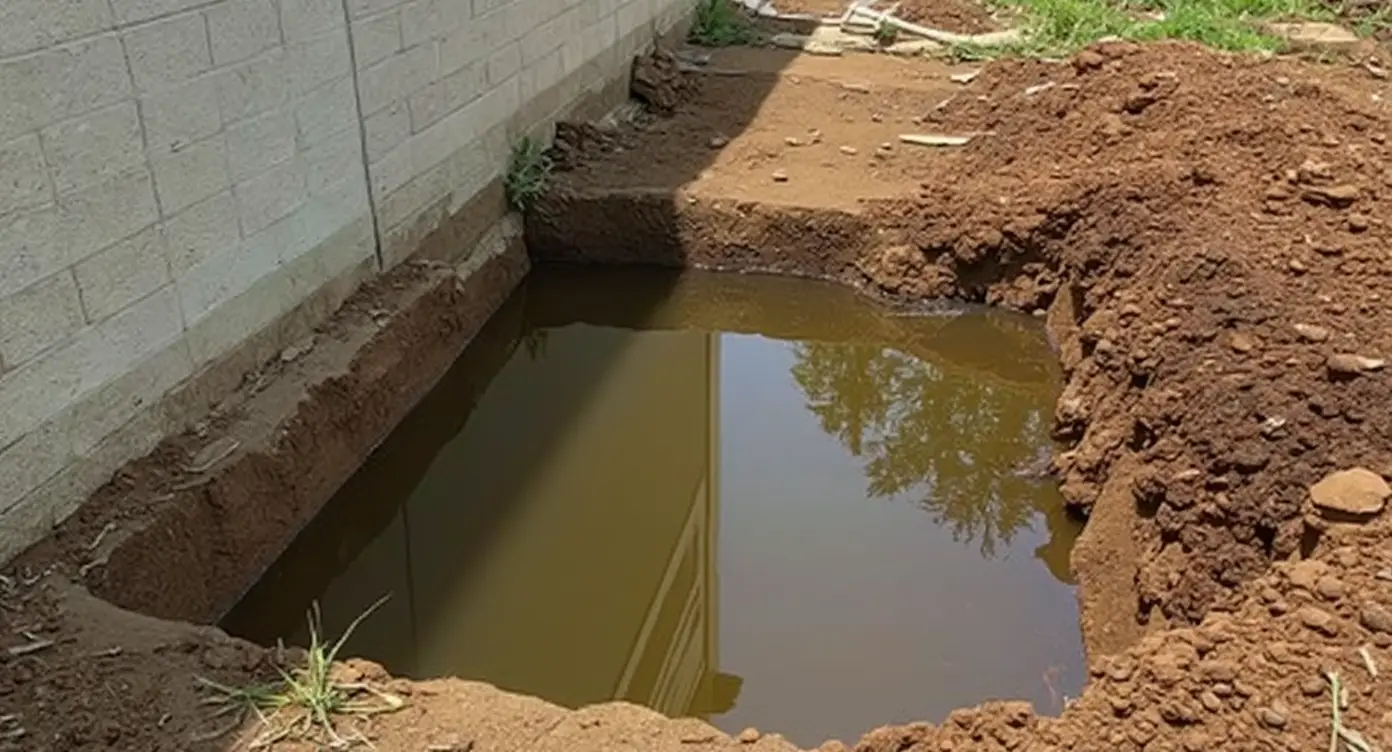
Des Moines and its surrounding communities sit on the Des Moines Lobe — a massive glacial deposit laid down during the last ice age roughly 12,000 to 14,000 years ago. This glacial till is a dense mixture of clay, silt, sand, gravel, and boulders compacted by thousands of feet of ice. Unlike Kansas City's expansive clay problem, Des Moines' primary basement threat is a persistently high water table that pushes groundwater against foundations with relentless hydrostatic pressure. In Polk, Dallas, and Story counties, the seasonal high water table can rise to within 2 to 3 feet of the surface — meaning the lower half of most basement walls sit in saturated soil for months each year.
Des Moines' primary basement threat is hydrostatic pressure from a shallow water table — not lateral clay pressure. This means water intrusion through floor cracks, cove joints, and wall penetrations is the dominant problem, and sump pump reliability is critical.
Why Des Moines' Glacial Till Creates Persistent Water Pressure
The Des Moines Lobe glacial till behaves differently from Kansas City's expansive clay. It does not swell and shrink dramatically with moisture changes. Instead, it holds water persistently. The till's dense composition — a mixture of fine-grained particles compacted by glacial weight — creates low permeability. Water enters the soil slowly, drains slowly, and accumulates at depth. The result is a water table that stays relatively high year-round, with seasonal peaks that can bring groundwater dangerously close to foundation level.
At 8 feet of full saturation, hydrostatic pressure alone produces approximately 499 pounds per square foot of inward force against the basement wall. In Des Moines, this is not a worst-case scenario — it is a realistic spring condition for homes in low-lying areas of West Des Moines, Pleasant Hill, and Altoona. The water does not need to be visible inside the basement to be exerting this force. By the time water appears at the cove joint or seeps through a floor crack, the soil has been fully saturated for days or weeks.
The glacial till also creates a unique drainage challenge. Because the soil drains so slowly, water that enters the ground during a spring rainstorm or snowmelt event stays in the soil column for weeks. Kansas City's clay may drain relatively quickly once the soil dries in summer, but Des Moines' till holds moisture persistently, keeping hydrostatic pressure elevated for extended periods. For a detailed breakdown of how these forces work, see our full analysis of hydrostatic pressure and water table behavior.
The Spring Double Hit: Snowmelt + Frozen Subsurface
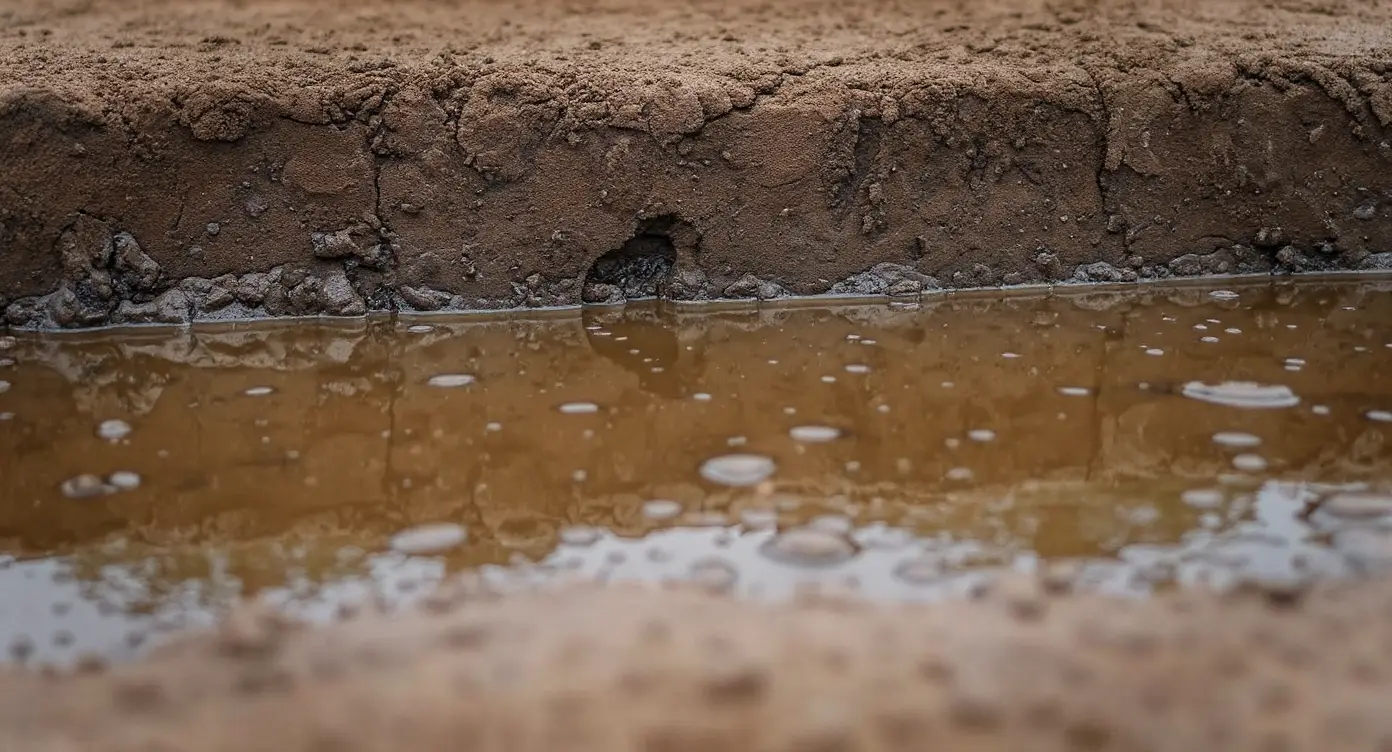
Des Moines experiences a seasonal risk pattern that is fundamentally different from Kansas City's. The most dangerous period is late February through April, when two conditions collide: accumulated snowpack begins to melt, and the subsurface soil is still partially frozen from winter. The frozen layer acts as a barrier — meltwater cannot percolate downward through the frost zone, so it flows laterally toward foundation walls and accumulates in the narrow thawed zone around the basement. This concentrates an enormous volume of water exactly where it does the most damage.
Late Winter/Spring (Feb – April)
Peak risk. Snowmelt + frozen subsurface creates maximum water concentration around foundations. Water table rises to within 2–3 feet of grade. Sump pumps run continuously. Highest risk of cove joint seepage and floor crack water entry.
Summer Storms (June – August)
Secondary risk. Iowa receives 36 inches of annual rainfall, with summer thunderstorms capable of dropping 2–4 inches in a single event. The water table, which may have partially receded, rises rapidly after heavy storms. Sump pumps that were quiet in May may run constantly in July.
Iowa's average winter accumulates 30 to 35 inches of snowfall across the Des Moines metro. When temperatures rise above freezing in March, this snowpack melts over days to weeks, delivering a sustained volume of water into the soil around every foundation. Unlike a single rainstorm that saturates and then drains, snowmelt delivers water continuously over an extended period — keeping the water table elevated and hydrostatic pressure sustained at peak levels for weeks.
Common Misconception
Most Des Moines homeowners assume: My sump pump handles the water, so I don't have a pressure problem.
The reality: A sump pump manages water after it has already entered the drainage system. It does not reduce the hydrostatic pressure pushing against your walls and floor slab. A sump pump that runs constantly is a symptom of persistent pressure — not a solution. If the pump fails during a spring storm, the pressure remains and the water comes in. See our guide to sump pump problems.
Flood Insurance and Des Moines: What's Covered and What Isn't
Des Moines is classified as an NFIP (National Flood Insurance Program) Class 5 community, which reflects the city's proactive floodplain management. However, this classification can create a false sense of security. NFIP flood insurance covers surface water flooding — water from overflowing rivers, storm surge, and surface runoff. It does not cover groundwater seepage through basement walls and floors, which is the dominant water intrusion mechanism in Des Moines.
Standard homeowners insurance also excludes groundwater seepage, hydrostatic pressure damage, and sump pump failure (unless a specific rider is purchased). This means the most common basement water problem in the Des Moines metro — water entering through the cove joint or floor cracks due to a high water table — is not covered by either standard homeowners insurance or NFIP flood insurance. The full cost of cleanup, repair, and prevention falls on the homeowner. For a detailed breakdown of what these repairs cost, see our cost guide for KC and Des Moines homeowners.
Neither homeowners insurance nor NFIP flood insurance covers the most common type of basement water entry in Des Moines — groundwater seepage from hydrostatic pressure. A finished basement flood costing $10,000 to $50,000 is entirely out-of-pocket.
What Des Moines Homeowners Typically See First
Because Des Moines' dominant threat is hydrostatic pressure from below rather than lateral pressure from the sides, the symptoms homeowners notice tend to be different from those in Kansas City.
Water at the cove joint (wall-floor seam)
The most common symptom in DM basements. Hydrostatic pressure forces water upward through the cold joint where the wall meets the floor slab. See cove joint water entry.
Sump pump running constantly in spring
A pump that cycles every few minutes for weeks during snowmelt is managing high hydrostatic pressure. If it fails, water enters. See sump pump problems.
Damp spots on the floor that never fully dry
Persistent moisture on the basement floor slab indicates water vapor transmission from below — a sign the water table is close to the slab level.
Musty smell even when no water is visible
Chronic elevated humidity from vapor transmission creates conditions for mold and microbial growth. Learn about moisture warning signs.
Basement Water Risk Across the Des Moines Metro
The Des Moines metro spans Polk, Dallas, Warren, and Story counties, all of which sit on the Des Moines Lobe glacial deposits. The water table depth varies by location, elevation, and proximity to the Des Moines and Raccoon rivers.
High-Priority Metro Areas
West Des Moines, IA
Jordan Creek/Valley Junction vulnerable, Des Moines Lobe glacial deposits
Ankeny, IA
Fast-growing, newer construction
Urbandale, IA
Mixed eras
Additional Metro Communities
Protecting Your Des Moines Basement: Where to Start
If you own a home in the Des Moines metro and have a basement, understanding your water table risk is essential — especially if your home was built before modern drainage requirements were implemented. Start with these resources:
The Ultimate Guide
Complete walkthrough from water pressure science to repair options
Interior Waterproofing
The most common solution for DM homes — drain tile + sump system
Sump Pump Systems
Your last line of defense — sizing, backup, and maintenance
Cost Guide
Real price ranges for Des Moines and KC homeowners
This page was researched and written by Patrick Smith in partnership with the professionals at JLB Foundation Repair and Basement Waterproofing. The information here is designed to be useful whether you hire a contractor or not. When you are ready for professional help, JLB serves the entire Des Moines metro area.